Risks and problems this service helps prevent
Post-tension cables are placed under very high tensile force. Cutting or drilling into a tendon can release stored energy suddenly, placing workers at risk and potentially causing serious structural damage.
A cable strike may require the work area to be isolated, the structure assessed by an engineer and specialist repairs completed before the project can continue. Damage can also affect slab performance, create cracking and result in costly delays or redesign.
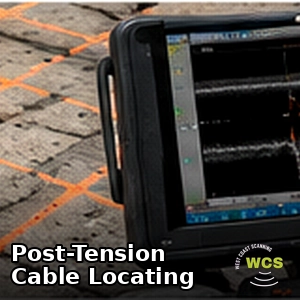
PT cable scanning helps identify likely tendon paths and supports safer penetration planning. Because reinforcement congestion, slab thickness and access can affect the scan, findings should be treated as part of a broader risk-management process that includes plans, engineering information and controlled work procedures.
What can be detected or assessed?
- Likely post-tension tendon alignments
- Reinforcement and mesh around the proposed work area
- Conduits and other embedded features
- Approximate depths where scan conditions allow
- Congested areas where drilling or cutting may carry greater risk
Typical projects and industries
- Core drilling through suspended slabs
- Commercial fit-outs and services installation
- Concrete cutting and penetrations
- Anchor and fixing installation
- Structural modifications and upgrades
- Repairs and remedial construction
How the process works
- Available structural drawings and the proposed penetration locations are reviewed.
- The slab surface is inspected and a scan grid is created around each work area.
- GPR data is collected in multiple directions to distinguish tendon patterns from reinforcement and other targets.
- Likely cable paths and other relevant findings are marked clearly on the slab.
- The findings, limitations and any recommended relocation of penetrations are discussed onsite.
What the customer receives
- Clearly marked likely tendon locations
- Relevant reinforcement or conduit markings
- Approximate depths where supportable
- An onsite explanation of scan confidence and limitations
- Photographs or written reporting where included
Why West Coast Scanning is well positioned to help
West Coast Scanning understands that PT cable locating is safety-critical work, not a box-ticking exercise. With more than 12 years of industry experience, Chris provides the scan personally and communicates the findings directly to the people planning or completing the penetration.
Our owner-operated structure supports fast responses, flexible scheduling and competitive rates across Perth and regional WA. We use quality GSSI scanning equipment, provide free quotes and can often deliver same-day results and invoicing where site conditions and scope allow.
Frequently asked questions
Why are post-tension cables dangerous to cut?
The tendons hold significant stored energy and are structurally important. A strike can injure workers, damage the slab and require specialist engineering and repairs.
Can scanning guarantee the location of every cable?
No. Scanning provides interpreted findings based on accessible data and site conditions. Congestion, depth, slab construction and interference can affect confidence.
Should I provide structural drawings?
Yes. Drawings help the operator understand expected tendon patterns and provide useful context, although onsite scanning is still needed because actual positions can vary.
How large an area should be scanned?
The scan area should extend beyond the exact proposed penetration so nearby tendons, reinforcement and conduits can be understood. Chris can advise based on the work scope.
Can you mark a safe drilling point?
The scan can identify detected hazards and lower-risk areas, but the contractor and project team remain responsible for final work decisions and safe drilling procedures.