Risks and problems this service helps prevent
Buried services are not always where plans suggest they should be. Records may be old, incomplete or based on approximate alignments, while private services are often missing from public utility information altogether.
A service strike can expose workers and the public to electric shock, gas release, flooding, fire, contamination or loss of communications. Repairs may require emergency contractors and utility providers, and the affected area may need to remain closed while the damage is assessed.
Locating services before excavation helps contractors define safer work zones, refine trench routes and plan potholing or verification work. It does not replace safe excavation procedures, current plans or physical verification, but it adds essential site-specific evidence before ground is disturbed.
What can be detected or assessed?
- Traceable electrical and communications cables
- Metallic water and gas services
- Sewer and drainage alignments where detectable
- Non-metallic services or subsurface disturbances where GPR conditions allow
- Service routes, junctions and approximate depths
- Possible underground structures or anomalies
Typical projects and industries
- Civil excavation and trenching
- Electrical and communications installation
- Plumbing, drainage and sewer works
- Roadworks and infrastructure projects
- Commercial and industrial sites
- Mining, regional and remote WA projects
How the process works
- Available plans, utility information, site photographs and the proposed excavation area are reviewed.
- Visible service entries, pits, meters and other site clues are inspected.
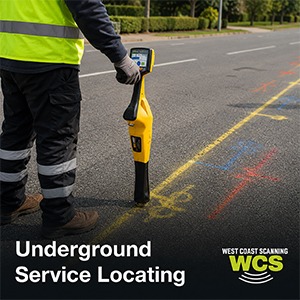
- Electromagnetic locating and GPR are used where suitable to trace potential services and anomalies.
- Findings are cross-checked, interpreted and marked onsite using standard service colours where appropriate.
- The limitations and recommended next steps, including physical verification where required, are explained.
What the customer receives
- Onsite service markings and approximate routes
- Approximate depths where equipment and conditions allow
- A verbal site briefing on findings and limitations
- Photographs or marked-up information where requested
- Written reporting where included in the project scope
Why West Coast Scanning is well positioned to help
West Coast Scanning combines more than 12 years of practical industry experience with the speed and flexibility of a small family business. Chris handles the enquiry, completes the work and explains the findings, so information is not lost between a sales team and the person on site.
With quality GSSI and electromagnetic locating equipment, competitive pricing and coverage across all of Western Australia, West Coast Scanning can support metropolitan, regional and time-sensitive projects. Free quotes and fast same-day responses are often available, and many regular clients value the personal service and straightforward communication.
Frequently asked questions
Can you locate every underground service?
No locating method can guarantee detection of every service. Results depend on materials, depth, ground conditions, access, equipment connection points and the quality of available information.
Can you locate PVC or non-metallic pipes?
GPR may detect some non-metallic services or the trench disturbance around them, but success varies significantly with soil conditions, depth, pipe size and moisture.
Do I still need Before You Dig Australia plans?
Yes. Current utility information should form part of the investigation, but onsite locating is important because plans can be approximate and may not include private services.
Do the services need to be exposed after locating?
Physical verification, often by non-destructive digging or careful hand excavation, may be recommended before high-risk work begins.
Do you travel to regional WA?
Yes. West Coast Scanning services Perth and regional Western Australia. Send the location, dates and scope so travel and scheduling can be assessed.