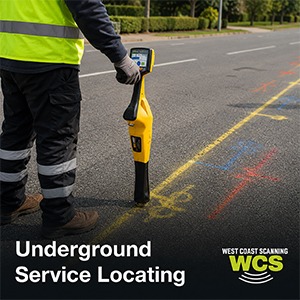
Underground service locating is the process of tracing and marking buried utilities before excavation, trenching, boring, drilling or construction work. Professional electromagnetic locating equipment, GPR and available site information may be combined to help identify electrical, communications, water, gas, sewer and other underground services.
Schmidt hammer testing, also called rebound hammer testing, is a non-destructive method used to assess the surface hardness and comparative uniformity of concrete. The spring-loaded device records a rebound value when applied to the surface, which can be used as an indicator of relative concrete quality when interpreted with the correct procedures and project context.
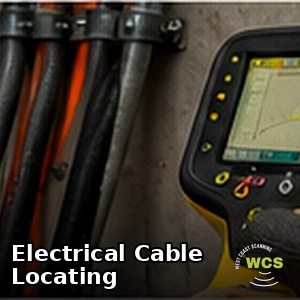
Electrical cable locating identifies and traces live or inactive electrical services before excavation, drilling, cutting or construction. Electromagnetic locating equipment, GPR and available plans may be used together to help establish the route and approximate depth of underground or embedded high-voltage and low-voltage cables.
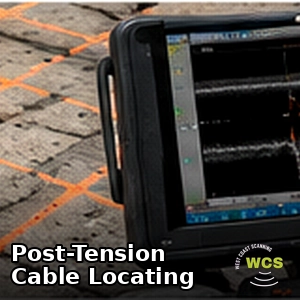
Post-tension cable locating uses concrete scanning equipment and careful interpretation to identify the likely position and direction of tensioned steel tendons within a post-tensioned slab. The information helps contractors plan penetrations, core holes, fixings and concrete cutting away from these critical structural elements.
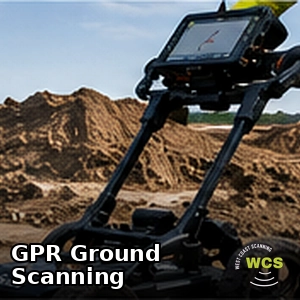
Ground Penetrating Radar, commonly called GPR, sends high-frequency radar energy into the ground and records reflections from changes below the surface. A trained operator interprets these responses to investigate possible services, buried structures, voids, tanks, trenches and other subsurface features without immediately excavating the area.

Recent Comments