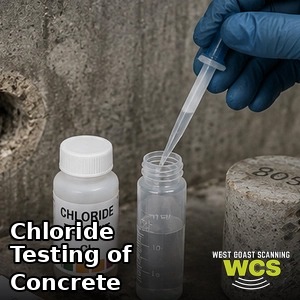
Chloride testing measures the concentration of chloride ions within concrete, usually using powder or core samples taken at selected depths. Elevated chloride levels can break down the protective environment around reinforcing steel and increase the risk of corrosion, cracking and spalling, particularly in coastal, marine, industrial or salt-exposed structures.
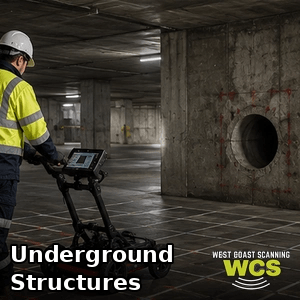
Subsurface scanning uses Ground Penetrating Radar (GPR) and complementary locating methods to investigate what may be hidden below soil, pavement, concrete or other accessible surfaces. It can help identify buried services, structures, voids, changes in material and other anomalies without immediately disturbing the ground.
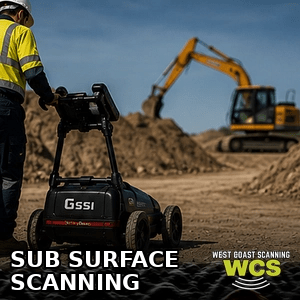
Subsurface scanning uses Ground Penetrating Radar (GPR) and complementary locating methods to investigate what may be below the ground before excavation, trenching, drilling, piling or construction begins. It can help identify buried services, voids, old foundations, tanks, pits, changes in ground conditions and other subsurface anomalies that may affect the way a project is planned or carried out.
For projects across Perth and regional Western Australia, subsurface scanning provides a practical, non-destructive first look at what may be hidden beneath soil, pavement, concrete or other accessible surfaces. It helps project teams make better decisions before machinery arrives and before small unknowns become expensive surprises.
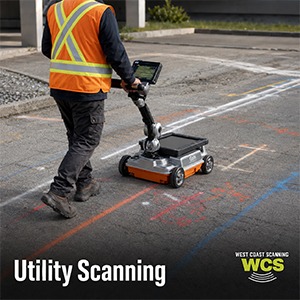
Utility scanning is the process of locating and mapping buried services before excavation, trenching, drilling or construction begins. Electromagnetic locating and Ground Penetrating Radar (GPR) may be used together to investigate electrical cables, communications, water lines, gas services, drainage and other underground utilities, depending on the site conditions and the material being located.
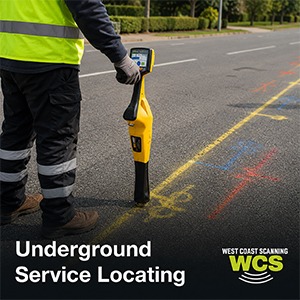
Underground service locating is the process of tracing and marking buried utilities before excavation, trenching, boring, drilling or construction work. Professional electromagnetic locating equipment, GPR and available site information may be combined to help identify electrical, communications, water, gas, sewer and other underground services.
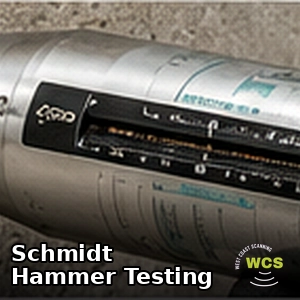
Schmidt hammer testing, also called rebound hammer testing, is a non-destructive method used to assess the surface hardness and comparative uniformity of concrete. The spring-loaded device records a rebound value when applied to the surface, which can be used as an indicator of relative concrete quality when interpreted with the correct procedures and project context.

Recent Comments